Year 1 science lesson plans: What would it be like to live on an island elsewhere in the world?
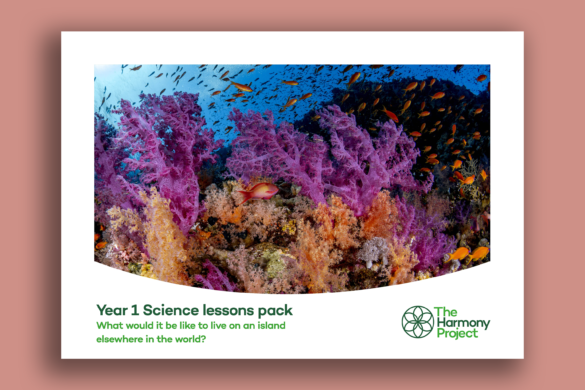
Lesson plans to support children's learning about the animals that live on and around coral reefs
This pack contains six lesson plans that deliver National Curriculum requirements for Year 1 relating to Animals, including humans. This sequence builds on children’s learning in the EYFS about animals that live in different places around the world and on their prior science learning in Year 1 as part of the learning enquiry Where do we live and what makes it special?.
Children learn to identify and name some of the animals that live on or around coral reefs and learn about what they eat. They extend their knowledge of vertebrate groups they have previously encountered and learn about the work being carried out by scientists around the world to restore coral reefs.
These lessons include opportunities to learn in Nature, and all the supporting resources teachers need to facilitate this learning are included. There are also ideas for adapting the learning to suit the needs of all learners. Where links can be made between the learning and the school’s Climate Action Plan, these are highlighted.
This teaching sequence has been developed as part of the Year 1 learning enquiry What would it be like to live on an island elsewhere in the world?, linked to the principle of Oneness.
Which areas of the National Curriculum are covered?
The lessons in this pack deliver the following National Curriculum statutory requirements for Year 1:
Animals, including humans
- Identify and name a variety of common animals including fish, amphibians, reptiles, birds and mammals
- Identify and name a variety of common animals that are carnivores, herbivores and omnivores
- Describe and compare the structure of a variety of common animals (fish, amphibians, reptiles, birds and mammals, including pets)
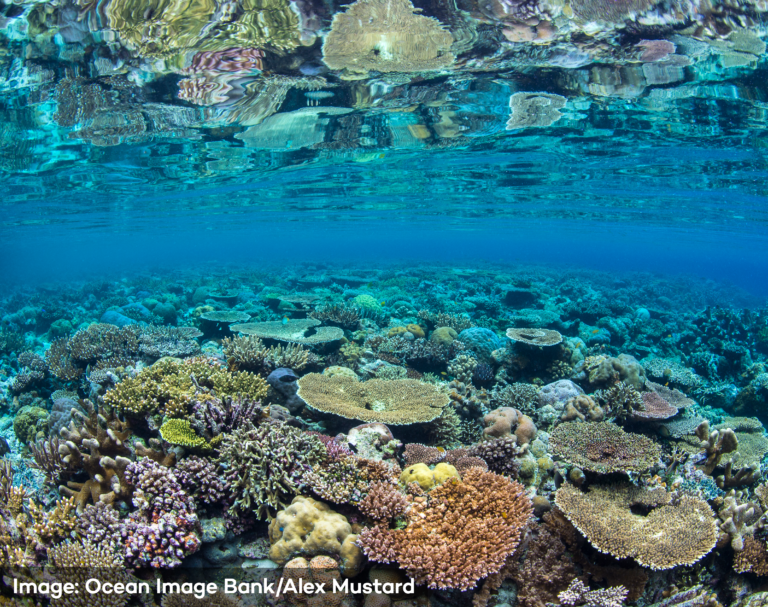
Lesson 1: What animals might we see on and around a coral reef?
In the first lesson in this sequence, the children learn to identify and name some of the animals that live on and around coral reefs. They draw on their existing knowledge and understanding to determine which are vertebrates and which vertebrate groups they belong to. They find out more about the fish, mammals, reptiles and birds that live in locations where coral reefs are found.
Lesson 2: What do the animals on and around a coral reef eat?
The children continue their learning by finding out more about the diet of some of the animals that live on or around a coral reef that they encountered in Lesson 1. They group these animals according to what they eat, recording what they have learned in their Nature journals.
Lesson 3: How do we know that a sea turtle is a reptile, not an amphibian?
In the third lesson, the children use what they already know about reptiles and amphibians to explore the structure, appearance and behaviour of sea turtles and to consider how this helps us to identify them as reptiles. The are introduced to the symbiosis between sea turtles and fish in ocean ecosystems.
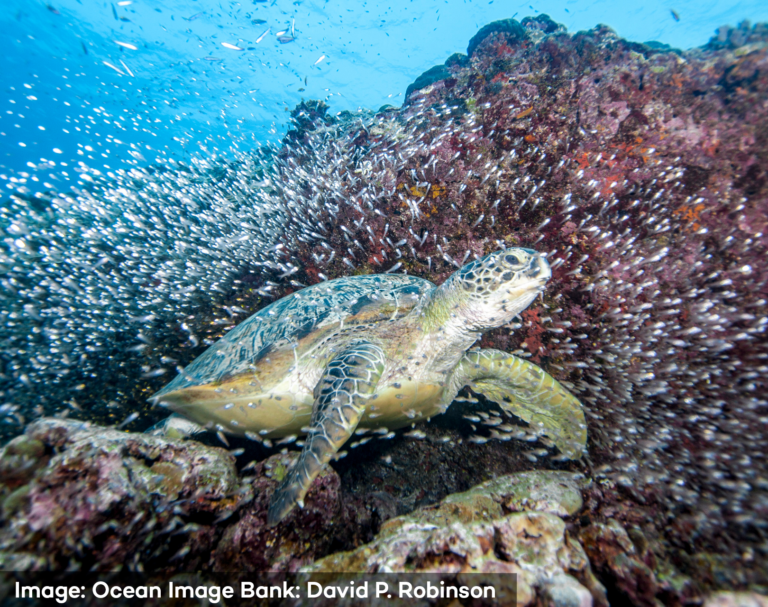
Lesson 4: Do dolphins have scales?
The fourth lesson plan in this pack provides an opportunity for children to explore the common misconception that dolphins are fish. They use what they already know about the structure, appearance and behaviour of fish and mammals to correctly identify dolphins as mammals before learning more about the social interaction of these fascinating animals.
Lesson 5: Where would we find a parrotfish?
The children’s learning continues in this lesson with a focus on the fish that live on or around coral reefs. They consider the factors that help us to identify these species as fish, drawing on their existing knowledge of the structure, appearance and behaviour of this group of vertebrates. They learn to identify and name parrotfish and find out about the role parrotfish play in maintaining the health of coral reef ecosystems.
Lesson 6: Who is working to restore our coral reefs?
In the final lesson in this pack, the children find out about some of the threats to coral reefs worldwide. They sequence fact cards to tell the story of what scientists are doing to restore coral reefs, presenting what they have learned to the class. The learning concludes with a reflection on why it is important to care for our coral reefs.